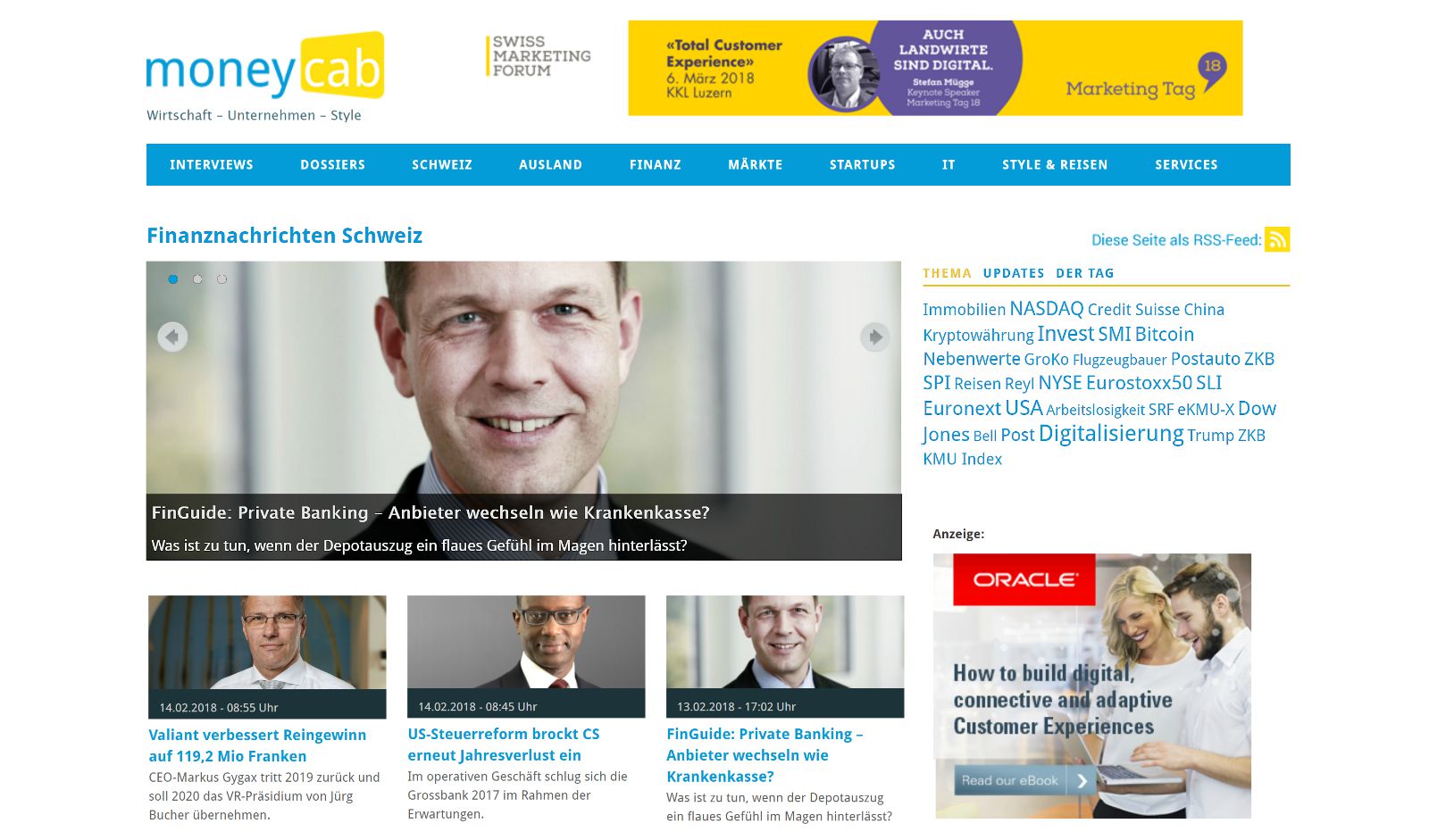
Weshalb wechseln Kunden die Krankenkasse, aber nicht die Bank? Moneycab.com berichtet über die Idee, dass Private-Banking-Kunden wie bei der Krankenkasse vergleichen und bei Unzufriedenheit den Anbieter wechseln sollten. Damit würde der Wettbewerb gestärkt und die Rendite der Kundenportfolios erhöht. Den Artikel finden Sie unter diesem Link.
Blog
-

Are You Satisfied With the Performance?
At the beginning of each year, we receive our portfolio statements, which show us how our investments have performed. Most of us take note of the values and leave it at that. But haven’t you ever wondered whether the returns you have achieved are really good? Whether and how you could have achieved a higher performance? In this article, we want to explore this topic further.
Assessing Performance
The first task is to be able to make a rigorous assessment of the return achieved. This requires some effort, but it is doable. Hopefully you are pursuing a clear investment strategy. How is it defined? Most investment strategies can be categorized on the basis of equity exposure: from income strategies (no or almost no equity exposure) to dynamic strategies (80-100% equity exposure). There are also wealth managers with whom you do not agree to a specific equity allocation, but rather a individual risk profile that is implemented with various asset classes based on opportunities and which target specified returns.
A good comparison of performance compares apples with apples and pears with pears wherever possible. So if you want to categorize your returns properly, you need to apply the correct benchmark. For example, if your money is invested in a “balanced” strategy, compared it to such strategies. As you know, hardly any providers publicize the returns they have achieved. Notwithstanding this there is a good alternative: wealth management funds. In the case mentioned above, look for “balanced” wealth management funds (also known as mixed funds, strategy funds or portfolio funds) that work with similar guidelines to yours or your wealth manager. It is best to take 3-4 funds and average them out. Admittedly, the search for suitable investment funds from the thousands on offer is tedious. But once you have done the work once, you can use the same funds every year.
To be able to make a accurate comparison, you also need to consider the costs. If you want to compare your own return after deducting all costs, don’t forget to include the custody account fee for the investment funds. In addition, distributions must be taken into account; depending on whether your interest and dividends are included in your return figures or not, you must select accumulating or distributing investment funds as a comparative figure.
Once you have compared your returns with the competing products, it’s time to interpret them. If your performance is comparatively better, you will probably leave it at that and sit back and relax. If your performance is worse, you will want to know why. There are almost infinite possibilities for this. It could be due to the geographical or currency composition of your securities, the proportion of equities, the average remaining term of the bonds, whether or not hedging has been undertaken, the selection of individual securities and so on.
It is normal to have a bad year from time to time compared to your competitors. Even the most successful wealth managers are sometimes off the mark. If, on the other hand, you notice a lower return over several years, you should take action.
Options for Actions
Do you manage your money yourself? Then ask yourself honestly and objectively why you should be able to do this better than professionals who deal with nothing but investments every day. Costs are often cited as a reason for managing your assets yourself. Sure, you save the wealth management fee. However, a good wealth manager recoups his fees through better performance. Another frequently cited reason for self-management is a lack of trust in one’s bank or a lack of knowledge about who are actually trustworthy and successful wealth managers. Since FinGuide AG was founded, however, this argument is no longer valid, because FinGuide guides you simply and free of charge to the provider that best suits your needs.
The easiest way to increase your target return is to increase your risks, because taking risks is rewarded with a higher return in the long term. If your risk appetite (how much risk do you want to take?) and risk capacity (how much risk can you take?) have changed since you defined your investment strategy, this may be a good option. However, increasing risk without taking into account your risk appetite and risk capacity can go very wrong. The key questions you need to ask yourself are (1) how long will I not need the funds invested and (2) what level of loss will I not lose sleep over?
Do you have your money managed? Then you will hear exactly why your return is lower than that of the competition in the annual performance review meeting. And the reasoning will always be that your provider did everything right and had very good reasons for the decisions taken. If you come to the conclusion that you are not satisfied with the performance of your bank or wealth manager, switch! FinGuide will help you find the right provider.
The switching rate of private banking clients in Switzerland is very low. As a result, many providers that do not offer any real added value are able to survive for a long time. The lack of transparency about the performance achieved protects the bad ones. If more bank customers were to look at their returns, the bad providers would lose their customers and the good ones would gain new ones. But the competition only plays if customers are informed and prepared to act. Are you?
FinGuide helps you to find the right wealth management for you. You can find more information on our homepage.
-
Depotauszug erhalten: Sind Sie mit der Rendite zufrieden?
Am Anfang jedes Jahres kommen die Depotauszüge, die uns aufzeigen, wie sich unsere Anlagen entwickelt haben. Die meisten von uns nehmen die Werte zur Kenntnis und lassen es dabei bewenden. Aber haben Sie sich nicht auch schon gefragt, ob Ihre erzielte Rendite wirklich gut ist? Ob und wie Sie allenfalls eine höhere Rendite hätten erzielen können? In diesem Artikel wollen wir diesem Thema einmal etwas nachgehen.
Rendite beurteilen
Die erste Aufgabe besteht darin, die erzielte Rendite fundiert beurteilen zu können. Das bedeutet etwas Aufwand, ist aber machbar. Hoffentlich verfolgen Sie eine klare Anlagestrategie. Wie ist sie definiert? Die meisten Anlagestrategien lassen sich auf Grund des Aktienanteils in Kategorien einordnen: von Einkommensstrategien (kein oder fast kein Aktienanteil) bis zu dynamischen (80-100% Aktienanteil). Daneben gibt es auch Vermögensverwalter, mit denen Sie als Kunde nicht einen Aktienanteil vereinbaren, sondern ein bestimmtes Risikoprofil, das opportunistisch mit diversen Anlageklassen umgesetzt wird und bestimmte Zielrenditen verfolgt.
Ein guter Renditevergleich vergleicht möglichst Äpfel mit Äpfeln und Birnen mit Birnen. Wenn Sie also Ihre Rendite sauber einordnen wollen, müssen Sie den korrekten Vergleichsmassstab anlegen. Ist Ihr Geld zum Beispiel in einer «ausgewogenen» Strategie investiert, suchen Sie solche Strategien. Nun publiziert bekanntlich kaum ein Anbieter seine erreichten Renditen. Macht nichts, denn es gibt eine gute Alternative: Vermögensverwaltungsfonds. Suchen Sie sich also im oben erwähnten Fall «ausgewogene» Vermögensverwaltungsfonds (auch gemischte Fonds, Strategiefonds oder Portfolio-Fonds genannt) heraus, die mit ähnlichen Vorgaben wie Sie resp. Ihr Vermögensverwalter arbeiten. Am besten nehmen Sie 3-4 Fonds und bilden daraus einen Mittelwert. Zugegeben, die Suche nach passenden Anlagefonds aus den Tausenden, die angeboten werden, ist mühsam. Wenn Sie die Arbeit aber einmal gemacht haben, können Sie jedes Jahr wieder die gleichen Fonds heranziehen.
Um den Vergleich wirklich korrekt durchführen zu können, beachten Sie auch die Kosten. Wenn Sie Ihre eigene Rendite nach Abzug aller Kosten vergleichen wollen, vergessen Sie nicht, bei den Anlagefonds noch die Depotgebühr einzurechnen. Ausserdem sind die Ausschüttungen zu beachten, je nachdem ob Ihre Zinsen und Dividenden bei Ihren Renditezahlen dabei sind oder nicht, müssen Sie thesaurierende oder ausschüttende Anlagefonds als Vergleichsgrösse auswählen.
Haben Sie nun also Ihre Rendite mit den Konkurrenzprodukten verglichen, geht’s an die Interpretation. Sind Ihre Werte im Vergleich besser, werden Sie es wahrscheinlich dabei belassen und sich zufrieden zurücklehnen. Sind Ihre Werte schlechter, werden Sie wissen wollen, wieso. Dafür gibt es fast unendlich viele Möglichkeiten. Es kann an der geografischen oder währungsmässigen Zusammensetzung Ihrer Wertschriften liegen, am Aktienanteil, an der durchschnittlichen Restlaufzeit der Obligationen, daran, ob Absicherungen vorgenommen wurden oder nicht, an der Auswahl der einzelnen Titel und so weiter.
Ab und zu ein im Konkurrenzvergleich schlechtes Jahr zu haben ist normal. Selbst die erfolgreichsten Vermögensverwalter liegen mal daneben. Wenn Sie hingegen über mehrere Jahre eine Minderrendite feststellen, sollten Sie handeln.
Handlungsmöglichkeiten
Verwalten Sie Ihr Geld selber? Dann fragen Sie sich ehrlich und selbstkritisch, weshalb Sie das besser können sollten als Profis, die sich jeden Tag mit nichts anderem als der Geldanlage beschäftigen. Oft werden Kosten als Grund dafür genannt, dass man sein Vermögen selber verwaltet. Klar, die Vermögensverwaltungsgebühr spart man sich so. Ein guter Vermögensverwalter allerdings holt seine Gebühren mit Leistung wieder herein. Ein ebenfalls häufig genannter Grund für das selber verwalten ist mangelndes Vertrauen in seine Bank oder Nichtwissen darüber, wer denn tatsächlich vertrauenswürdige und erfolgreiche Vermögensverwalter sind. Seit der Gründung der FinGuide AG zählt allerdings dieses Argument nicht mehr, denn FinGuide führt Sie einfach und kostenlos zu demjenigen Anbieter, der am besten zu Ihren Bedürfnissen passt.
Die einfachste Weise, seine Zielrendite zu erhöhen, ist die Erhöhung der Risiken, denn das Eingehen von Risiken wird langfristig mit einer höheren Rendite belohnt. Wenn sich Ihre Risikobereitschaft (Wieviel Risiko wollen Sie eingehen?) und Ihre Risikofähigkeit (Wieviel Risiko können Sie eingehen?) seit der Definition der Anlagestrategie verändert hat, kann das eine gute Möglichkeit sein. Die Risiken allerdings ohne Konsultation der Risikobereitschaft und Risikofähigkeit zu erhöhen, kann gewaltig schiefgehen. Die entscheidenden Fragen, die Sie sich stellen müssen, sind 1. Wie lange brauche ich die angelegten Mittel nicht und 2. Mit welchem Verlust schlafe ich noch immer gut.
Lassen Sie Ihr Geld verwalten? Dann werden Sie im jährlichen Gespräch zur so genannten «Performance Review» genau hören, weshalb Ihre Rendite unter derjenigen der Konkurrenz liegt. Und die Begründung wird immer darauf herauslaufen, dass Ihr Anbieter alles richtig gemacht hat und sehr gute Gründe für seine Entscheidungen hatte. Wenn Sie zum Fazit kommen, dass Sie mit der Leistung Ihrer Bank resp. Ihres Vermögensverwalters nicht zufrieden sind, wechseln Sie! FinGuide hilft Ihnen, den richtigen Anbieter zu finden.
Die Wechselrate von Private-Banking-Kunden ist in der Schweiz sehr tief. Dies führt dazu, dass viele Anbieter, die keinen echten Mehrwert erbringen, lange überleben können. Die Intransparenz über die erzielten Renditen schützt die Schlechten. Würden sich mehr Bankkunden mit Ihren Renditen auseinandersetzen, würden die schlechten Anbieter ihre Kunden verlieren und die guten neue dazugewinnen. Die Konkurrenz spielt aber nur, wenn die Kunden sich informieren und bereit sind zu handeln. Sind Sie es?
FinGuide hilft Ihnen, die für Sie passende Vermögensverwaltung zu finden. Mehr Infos dazu gibt’s auf unserer Homepage.
-

Investing: What Should I Look Out For?
Have you already spent a lot of time trying to get a product such as a vacuum cleaner as cheaply as possible? If you are successful, you might save 50 francs through thorough research and be happy about it. Do you also make the same effort when investing money? And aren’t the amounts involved much higher? Here we give you an overview of the questions you should ask yourself when investing.
Goal Definition
If you have clearly defined your goals, you have already done a lot of work. Next, you need to ask yourself what role you want to play in your investments. Do you want to decide in which markets you invest, how much and with which investment instruments? Or are you prepared to delegate the decisions? Various studies show that investors systematically overestimate themselves. They also judge the results of their own decisions too positively, i.e. profits are attributed to their own abilities, while losses are often simply ignored. The vast majority of investors would probably be better off if wealth management were delegated.
Delegating wealth management decisions is not only possible for private banking clients. Small investors can also benefit from well-diversified, actively managed wealth management via so-called portfolio or mixed funds.
When it comes to investing money, literature and relevant guides usually talk about the “magic triangle” of investment: security, return and availability. You want all three? Sure, but this is precisely where the problem lies, because the objectives of the “magic triangle” involve conflicts. You have to make a decision: How important are high security, high returns or quick availability for you?Goals can only be defined in line with an honest assessment of your personal situation. How well will you sleep if you have lost 10%/20%/30% of your assets due to price falls? When will you need the funds again? For what? Answering these questions will lead you to your individual risk appetite (How much risk do I want to take?) and risk capacity (How much risk can I take?).
And it doesn’t stop there. There are other goals you can aim for with your investment. Do you want to do good? Would you like to invest your money as sustainably as possible? Do you want to promote or explicitly exclude certain areas of the economy?
Define Your Own Goals
If you have clearly defined your goals, you have already done a lot of work. Next, you need to ask yourself what role you want to play in your investments. Do you want to decide in which markets you invest, how much and with which investment instruments? Or are you prepared to delegate the decisions? Various studies show that investors systematically overestimate themselves. They also judge the results of their own decisions too positively, i.e. profits are attributed to their own abilities, while losses are often simply ignored. The vast majority of investors would probably be better off if wealth management were delegated.
Delegating wealth management decisions is not only possible for private banking clients. Small investors can also benefit from well-diversified, actively managed wealth management via so-called portfolio or mixed funds.
Define Your Investment Strategy
Once you have defined your goals, including your risk appetite and investment horizon, and are clear about your own role, you can define your investment strategy. Should your money be invested actively and opportunity-orientated or do you prefer a cost-effective passive investment strategy? Should your funds be invested primarily in Switzerland without currency risk or should they be globally diversified? Do you want to overweight or underweight certain markets? Do you want to invest money in bonds at all in times of negative interest rates? Are you interested in hedge funds, precious metals or private equity? Even if you delegate the investment decisions, you should give these questions some thought in order to be able to set a rough direction.
Select Provider
Where do you get good investment recommendations? Who has achieved good performance in the past? At what level of investable assets are you welcome at which providers? Which providers pay their advisors high bonuses if they sell expensive or proprietary products? How high are wealth management, custody and transaction fees? There are 260 banks and between 2,000 and 3,000 independent asset managers in Switzerland. Which of them meet your needs and expectations?
Conclusion
The number and complexity of questions to be answered in relation to investments is high. If you have a great deal of sound financial knowledge, you can work through these questions on your own and arrive at good solutions. A realistic self-assessment is essential. The vast majority of investors should use a bank or wealth manager for this: A good, reputable provider will guide you through the process and help you answer the questions correctly and objectively. Investors with available assets of at least CHF 500,000 can access FinGuide free of charge to select a provider. Investors who do not (yet) have these assets can use comparison platforms to get an initial picture of the providers. You can find more information about free advice from FinGuide on our homepage.
-
Geld anlegen: Worauf muss ich achten?
Haben Sie auch schon viel Zeit dafür eingesetzt, ein Produkt wie z.B. einen Staubsauger möglichst günstig zu bekommen? Wenn Sie erfolgreich sind, sparen Sie durch gründliche Recherche vielleicht 50 Franken ein und freuen sich darüber. Treiben Sie diesen Aufwand auch für die Geldanlage? Und geht es da nicht um viel höhere Beträge? Wir geben Ihnen hier eine Übersicht, welche Fragen Sie sich bei der Geldanlage stellen sollten.
Ziele definieren
In der Literatur und einschlägigen Ratgebern ist im Zusammenhang mit der Geldanlage üblicherweise vom «magischen Dreieck» der Geldanlage die Rede: Sicherheit, Rendite, Verfügbarkeit. Sie möchten alle drei? Klar, aber genau hier liegt die Problematik, denn die Ziele des «magischen Dreiecks» beinhalten Konflikte. Sie müssen sich entscheiden: Wie wichtig sind für Sie grosse Sicherheit, hohe Rendite oder schnelle Verfügbarkeit?
Die Definition der Ziele kann nur im Einklang mit einer ehrlichen Beurteilung Ihrer persönlichen Situation erfolgen. Wie gut schlafen Sie noch, wenn Sie 10%/20%/30% Ihres Vermögens durch Kursrückgänge verloren haben? Wann brauchen Sie die Mittel wieder? Wofür? Die Beantwortung dieser Fragen führt Sie zu Ihrer individuellen Risikobereitschaft (Wieviel Risiko will ich eingehen?) und Risikofähigkeit (Wieviel Risiko kann ich eingehen?).
Und dabei hört es noch lange nicht auf. Es gibt weitere Ziele, die Sie mit der Geldanlage anstreben können. Möchten Sie Gutes tun? Möchten Sie Ihr Geld möglichst nachhaltig anlegen? Möchten Sie bestimmte Bereiche der Wirtschaft fördern oder explizit ausschliessen?
Eigene Rolle festlegen
Wenn Sie Ihre Ziele sauber definiert haben, liegt bereits ein gutes Stück Arbeit hinter Ihnen. Als nächstes müssen Sie sich fragen, welche Rolle Sie selber bei der Geldanlage spielen wollen. Wollen Sie entscheiden, in welchen Märkten Sie mit welchen Anlageinstrumenten wieviel investieren? Oder sind Sie bereit, die Entscheide zu delegieren? Diverse Studien zeigen, dass sich Anleger systematisch überschätzen. Ebenso werden die Ergebnisse der eigenen Entscheidungen zu positiv beurteilt, d.h. Gewinne werden den eigenen Fähigkeiten zugeschrieben, während Verluste ignoriert oder einfach ausgesessen werden. Die überwiegende Mehrheit der Anleger würde wohl besser fahren, wenn die Vermögensverwaltung delegiert würde.
Die Delegation von Vermögensverwaltungsentscheiden ist nicht nur für Private Banking Kunden möglich. Auch Kleinanleger können über sogenannte Portfolio- oder Mischfonds von einer gut diversifizierten aktiv gemanagten Vermögensverwaltung profitieren.
Anlagestrategie definieren
Wenn Sie Ihre Ziele inklusive Ihrer Risikobereitschaft und Ihres Anlagehorizontes festgelegt haben und sich über Ihre eigene Rolle im Klaren sind, kann die Anlagestrategie definiert werden. Soll Ihr Geld aktiv und chancenorientiert angelegt werden oder ziehen Sie eine kostengünstige passive Anlagestrategie vor? Sollen Ihre Mittel vor allem in der Schweiz ohne Währungsrisiko angelegt oder sollen sie global diversifiziert werden? Möchten Sie bestimmte Märkte über- oder untergewichten? Wollen Sie in Zeiten von Negativzinsen überhaupt Geld in Obligationen anlegen? Sind Sie an Hedge Funds, Edelmetallen oder Private Equity interessiert? Selbst wenn Sie die Anlageentscheide delegieren, sollten Sie sich zu diesen Fragen ein paar Gedanken machen, um die grobe Richtung vorgeben zu können.
Anbieter auswählen
Wo kriegen Sie gute Anlageempfehlungen? Wer hat in der Vergangenheit gute Renditen erzielt? Ab welchem Anlagebetrag sind Sie bei welchen Anbietern willkommen? Welche Anbieter zahlen ihren Beratern hohe Boni, wenn sie teure oder bankeigene Produkte verkaufen? Wie hoch sind Vermögensverwaltungs-, Depot- und Transaktionsgebühren? Es gibt in der Schweiz 260 Banken und zwischen 2’000 und 3’000 unabhängige Vermögensverwalter. Welche davon passen zu Ihren Bedürfnissen und Vorstellungen?
Fazit
Die Anzahl und die Komplexität der rund um die Geldanlage zu beantwortenden Fragen ist hoch. Wer über ein grosses, fundiertes Wissen im Finanzbereich verfügt, kann diese Fragen durchaus im Alleingang durcharbeiten und zu guten Lösungen gelangen. Eine realistische Selbsteinschätzung ist dabei unentbehrlich. Die überwiegende Mehrheit der Anleger sollte dafür eine Bank oder einen Vermögensverwalter in Anspruch nehmen: Ein guter, seriöser Anbieter führt Sie durch den Prozess und hilft Ihnen dabei, die Fragen richtig und fundiert zu beantworten. Anleger mit einem verfügbaren Vermögen von mindestens CHF 500’000 können für die Auswahl des Anbieters kostenlos auf FinGuide zugreifen. Anleger, die (noch) nicht über dieses Vermögen verfügen, können sich auf Vergleichsplattformen ein erstes Bild über die Anbieter verschaffen. Mehr Infos zur kostenlosen Beratung durch FinGuide finden Sie auf unserer Homepage.
-

FinGuide in Top 100 Fintech Startup List
Fintech is short for financial technology and refers to companies or systems that use the latest technology to introduce innovative and improved solutions to the financial services market. In this sense, FinGuide can also be classified as a fintech company, as the algorithm-based matching of customer needs and provider characteristics is novel. There are various rankings and overviews in the Swiss start-up scene.
These include a list of 100 fintech start-ups ‘Born in Switzerland’, where FinGuide made the list. We are delighted that FinGuide’s innovative business model has been recognized. You can find the overview of all 100 companies here.
-

Interview auf fundplat.com
Heute erschien auf fundplat.com ein spannendes Inverview zu FinGuide unter dem Titel: “Das hat dem Private Banking bisher gefehlt.” Es geht darin um das Angebot, das Geschäftsmodell, die Zielkunden und die Partner. Sie erfahren darin, weshalb FinGuide viel mehr ist als ein Vergleichsdienst oder wie FinGuide seine Partner aussucht.
Das ganze Interview finden Sie unter diesem Link.
-

Article About FinGuide On finews.ch
Today, finews.ch, the leading portal for the Swiss financial sector, reports on the launch of FinGuide: “Poor performance, too many changes of advisor, products that are too expensive and excessive bonuses for senior management – these are the annoyances facing bank clients today. A new portal comes to the rescue…” You can find the whole article (in German) here.
-
Artikel über FinGuide auf finews.ch
Heute berichtet finews.ch, das führende Portal der Schweizer Finanzbranche, über den Start von FinGuide: “Schlechte Performance, zu viele Beraterwechsel, zu teure Produkte und zu hohe Boni für die Führungsriege – mit diesen Ärgernissen ist die Bankklientel heute konfrontiert. Ein neues Portal eilt zu Hilfe..” Den ganzen Artikel finden Sie hier.
-

Dissatisfied Clients in Private Banking
This article was published today on LinkedIn by Matthias Hunn, founder of FinGuide. Imagine you are a Swiss private banking client, but somehow your bank doesn’t really excite you. The advisors change frequently. When you read about your bank in the press, it’s usually negative. The performance doesn’t convince either … in short, you think it can and should be managed better. What now?
The first place to go these days is, of course, Google. If you enter “find private bank” or similar search terms there you will see the pages of those private banks that either spend money on AdWords or have optimized their site well. The websites contain nice sounding promotional texts about how great the banks are. Not very helpful, because they can be bought. Of course, everyone on the web wants to present themselves in the most favorable way. The most useful information you can find are the annual Bilanz tests. They tell you which providers a jury has rated best for a particular customer with particular needs. That’s all very well. But do they have the same needs as you?
Perhaps you have already heard one or two names and think that this bank or that wealth manager could be interesting. So, you go to the websites of these providers and search for the information that is relevant to you: How much do the services cost? What exactly do I get there as a customer? Do they offer tax advice or are they familiar with trusts? How has their performance been in recent years? Unfortunately, you won’t find these inforamtion. Apart from plenty of well-formulated generalities about how incredibly future-oriented, innovative and long-term thinking they are and that the client is at the centre of everything they do.
So, if the internet doesn’t help you find a private bank or wealth manager, you could ask around. But who? It would be rather embarrassing to ask a colleague from the service club about his private bank when he is perhaps much tighter financially than he would like to admit. When it comes to personal finances, we still like to surround ourselves with a wall of silence that could give the Great Wall of China a run for its money.
Well then, perhaps there are no dissatisfied private banking customers and the aforementioned dissatisfaction is just an imagination? There are not many studies on this topic, but the existing ones clearly show that there are dissatisfied private banking clients. According to the LGT Private Banking Report 2016, 83% of Swiss private banking clients are satisfied or very satisfied with their provider. This means that around one in six clients is not satisfied. According to another study (which is not publicly available), around 5% of Swiss millionaires are very dissatisfied with their bank or wealth manager.
The willingness of dissatisfied clients to switch banks is low. When you talk to dissatisfied clients, you usually hear the same thing: Where should I switch to? Aren’t they all the same anyway? Go through all the hassle of switching so that I can be looked after by a promising young banker who will be promoted in 3 years because he is so good? No thanks.
Does this all sound familiar to you? Then take a look at www.finguide.ch. FinGuide AG is here to help dissatisfied private banking clients find the right investment partner. You can enter your requirements online in a structured way and then find out – by telephone or in person – which provider best meets your individual requirements. FinGuide works with selected banks and wealth managers that provide top performances. FinGuide’s database records the detailed services of these providers, including performance figures and costs. FinGuide AG receives commissions from these partners for the introduction of clients, which is why the service can be offered free of charge. Absolute neutrality of the advice is nevertheless guaranteed, as the commissions are exactly the same for all partners.
FinGuide AG is a start-up company that wants to shake up Swiss private banking. Until now, clients were acquired as private banking clients and the acquiring provider made every effort to meet their needs. Now there is a new way: customers take control themselves and, with the help of FinGuide, find the financial partner that best suits their needs. FinGuide is available free of charge to clients with available assets of at least CHF 500,000.